
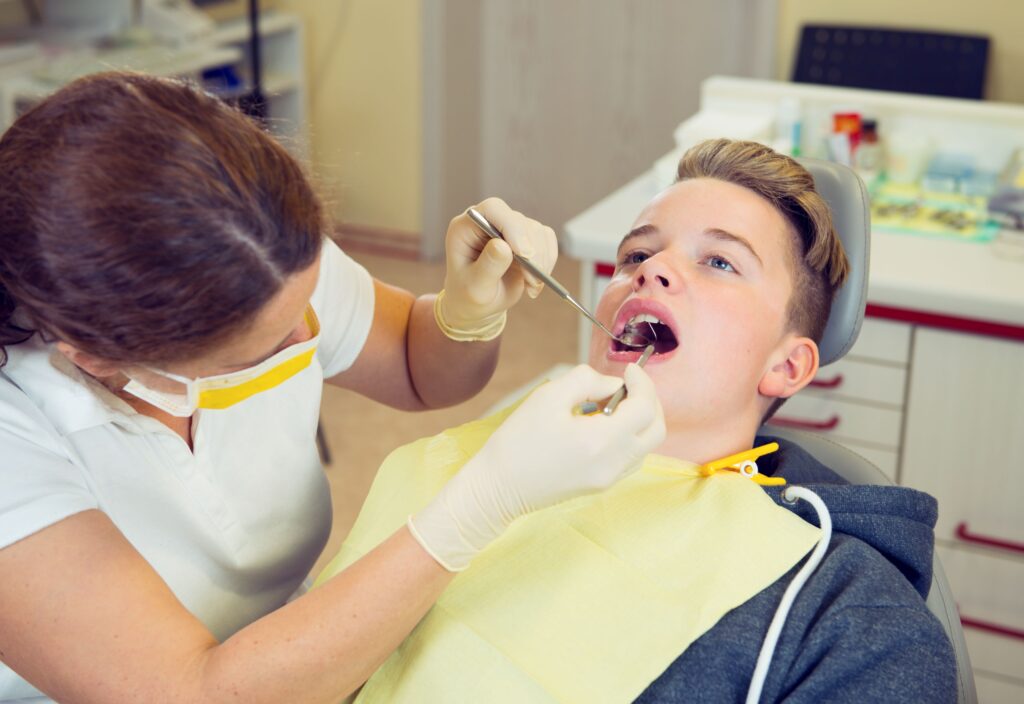
Many parents understand the importance of taking their kids to see the dentist every 6 months for a checkup and cleaning. Regular preventive visits allow your pediatric dentist to monitor your child’s still developing smile to catch any potential issues, including oral cancer, with enough time to treat them successfully.
If you’re surprised that your pediatric dentist checks for oral cancer as part of routine visits, continue reading to learn 3 facts about this dangerous condition that can help you understand how this standard screening benefits your child’s dental health!
Fact #1: It Can Refer to Multiple Kinds of Cancer
Would you be surprised to learn that there are two distinct kinds of oral cancer? Oral cavity cancer occurs in the front part of your mouth and can affect different areas, such as your tongue, the floor or roof of your mouth, or the tender tissues lining your lips, gums, and cheeks. Smoking and alcohol consumption are the leading causes of this dental disease.
But oropharyngeal cancers that affect the back of the mouth, tongue, tonsils, larynx, or upper throat also are categorized as a type of oral cancer, and is most commonly caused by HPV, or human papillomavirus.
Fact #2: It Can Potentially Affect Children and Teens
You’re not alone if you associate oral cancer with tobacco use and have therefore assumed that your child is unlikely to develop a problem. Sources have estimated that smoking cigarettes, vapes, and or using other products can make you up to 6 to 10 times more likely to develop this disease than non-smokers. Smaller children are unlikely to be smokers, but a reported 2.25 million, or approximately 8.1%, of middle and high school students use tobacco, meaning your youth could still be at risk.
But smoking isn’t the only contributing factor. Unfortunately, HPV-related diagnoses are on the rise, especially in youths. This condition can be passed from a mother to their child at birth and is believed to affect 14.7% of children aged 0 to 12 years old. Monitoring your child’s oral and overall health to help catch and treat any areas of concern before they become more problematic.
Fact #3: It Can Be Mistaken for Other Conditions
The early signs of oral cancer often start small, so it’s easy to mistake them for other, more ambivalent issues. For instance, painless lumps, sores, or patches on your child’s lips or in their mouth might be mistaken for bug bites, pimples, or other problems. Bleeding gums and/or cold sores can also often be attributed to benign concerns, like gingivitis, which can often be halted or reversed by flossing more consistently.
If you’ve noticed changes to your child’s mouth or they develop sores or wounds that don’t resolve after one or two weeks, it’s best to contact their pediatric dentist for an examination. They can assess your child’s condition to identify and treat the underlying concern, and will take appropriate steps if they suspect oral cancer is involved.
Meet the Author
Dr. Susan Podray-Donovan is passionate about helping kids and teens build and maintain happy, healthy smiles. She earned her dental doctorate at Temple University, where she also achieved her Orthodontic Certification and a Master’s in Biomedical Science. Today, she works diligently to deliver a complete menu of services, including routine oral cancer screenings, to meet your child’s unique oral healthcare needs conveniently under one roof. Whether they require a standard preventive visit or you’re concerned they’ve developed a problem, you can request an appointment on the website or call (678) 456-5572.