
Traditional Braces – Cumming, GA
A Reliable Way to Realign Your Child’s Grin
Did you know that crooked or gapped teeth can impact your child’s appearance and dental health? Fortunately, Dr. Podray-Donovan has a reliable way to realign your child’s grin. Standard braces are the tried-and-true method of straightening smiles because they can address everything from simple cases to more severe misalignments of the mouth and jaw. Continue reading to learn more about traditional orthodontics, and feel free to contact us with additional questions.
Why Choose Village Pediatric Dentistry for Traditional Braces?
- Skilled Orthodontist with 10+ Years of Experience
- Advanced Technology to Enhance Patient Comfort
- Vice President of the Georgia Association of Orthodontists
How Do Traditional Braces Work?

To straighten your child’s smile with braces, Dr. Podray-Donovan bonds metal brackets to their front surface. Then, she threads these with an archwire that can be tightened or loosened as needed to exert the right amount of pressure to move them. Your child will need a follow-up visit every 6 to 8 weeks to make necessary adjustments. Depending on the severity of their condition, treatment can take 18 months to a few years.
What Orthodontic Issues Can Braces Fix?

Before your child can get braces, you must schedule a consultation with Dr. Podray-Donovan. She’ll examine their dental condition and provide recommendations for solutions based on her findings. Some potential issues that can often be resolved with traditional orthodontics include:
Bite Misalignment
If your kid’s teeth don’t meet in the appropriate places when they relax their jaw, they might have a bite misalignment, also called malocclusion. For instance, if their upper arch extends too far beyond their lower one, they may suffer from an overbite.
Unfortunately, these conditions can wear down their enamel unevenly or prematurely, leaving their teeth more vulnerable to cracks, chips, and other injuries. They can also cause TMJ (temporomandibular joint) disorders that lead to a stiff or locked jaw.
Braces, bands, and elastics can reposition your child’s jaw and resolve the problem.
Crowded & Crooked Teeth
Teeth that overlap or are pressed too closely together can be problematic because they’re difficult to clean. When you can’t easily access all their sides, brushing and flossing them thoroughly is hard. As a result, plaque and tartar can accumulate and lead to cavities or gum disease.
Shifting your child’s teeth with braces creates a uniform appearance while allowing them to build and maintain a more consistent daily dental hygiene routine.
Gapped Teeth
Wide spaces in your kid’s smile can be just as harmful as overcrowding for a couple of reasons. Firstly, gaps are notorious for trapping bits of food that attract disease-inducing bacteria. On top of that, they leave more of the gum tissue exposed, which can lead to lacerations, infection, or gingivitis.
Bringing their teeth closer together can prevent these potential problems.
Caring for Your Child’s Braces
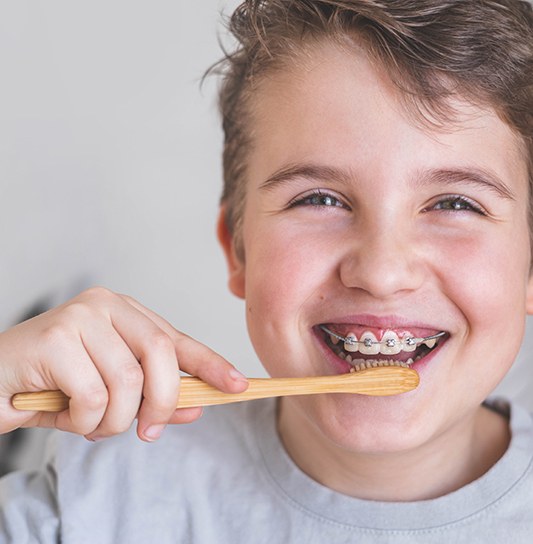
Because your child’s braces will be a permanent fixture on your child’s teeth throughout their treatment, you’ll need to help them learn to take good care of them. They need to continue to brush and floss regularly but might need special brushes and floss threaders that can reach around the metal brackets. Also, discourage them from eating overly hard, crunchy, or sticky foods that could break the brittle metal or yank one off a tooth.
Also, don’t forget to take your child to see their provider regularly to ensure their treatment stays on track!
Understanding the Cost of Traditional Braces

Straightening your child’s smile with traditional braces can improve their dental health while enhancing their appearance and boosting their confidence. But you might hesitate to proceed with their treatment if you’re concerned about the cost.
Our team in Cumming can provide a detailed estimate once we’ve examined your child’s condition and have a better understanding of their unique circumstances. Continue reading to learn more about how pricing is determined and how we help make dental services more affordable!
Factors That Affect the Cost of Traditional Braces
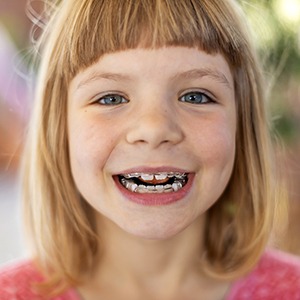
The total cost for your child’s orthodontic service can potentially be impacted by several different factors, such as:
- The length of the proposed treatment. The longer they must wear braces, the higher the costs of purchasing ongoing supplies, adjustments, checkups, etc.
- The severity of their misalignments. Patients with more severe issues are more likely to require longer treatments, which increases the invoice.
- The number of adjustments required. Your child will need to have occasional adjustments to their archwire to complete treatment at the anticipated time.
- Patient compliance. Kids who wear their bands as directed, keep their teeth and gums clean, and follow our team’s instructions are less likely to have orthodontic emergencies or other issues that might interfere with their timeline.
- Other appliances. You’ll be responsible for paying for additional supplies and services, like space maintainers, palatal expanders, headgear, elastics, retainers, etc.
Which Costs More: Professional Braces vs. "DIY" Options?
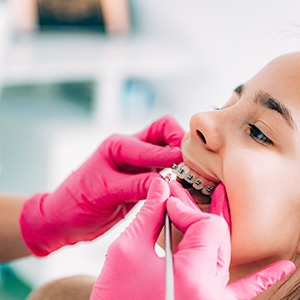
The price for braces can range from approximately $3,000 to $7,000+, which many patients assume is outside their budget. As a result, some parents have sought alternative methods of addressing their child’s dental misalignments. For example, some have made “do-it-yourself” braces with household supplies, such as earring backs, fishing lines, superglue, rubber bands, dental floss, and other materials.
While you might think this is an easy way to save money, you unfortunately run the risk of worsening your child’s dental condition. Not only might you shift their teeth further out of position, but you might inadvertently cut their gums or injure their enamel. Then, you would have to pay additionally to repair the damage.
Does Dental Insurance Cover Braces?
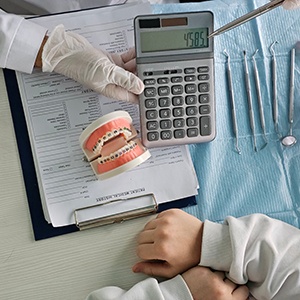
Some dental insurance plans do include up to 50% coverage for braces, though there may be restrictions, such as requiring they be deemed medically necessary. There may also be other limitations, like a deductible that must be met or a waiting period that must pass, before benefits kick in.
If you’re unsure whether your policy will cover your child’s orthodontics and need help finding the information, please let us know. Our staff is familiar with various policies and can help your family maximize your available benefits.
Options for Making Braces Affordable

Dr. Podray-Donovan understands that not all patients are covered by insurance, and doesn’t want your family’s financial situation to prevent you from affording your child’s braces. If you’re concerned about paying for their treatment, you might benefit from a flexible financial plan through CareCredit.
If your application is approved, you can divide the final invoice into more manageable installments that are paid over a designated period to help preserve your budget.
Traditional Braces FAQs
Do Traditional Braces Hurt?
This is one of the most-asked questions about traditional braces, especially among our younger patients. To be honest, it is normal to experience some soreness and pressure from time to time, especially in the hours immediately after an adjustment appointment. The good news is that there are several ways to alleviate symptoms like these, including sipping on cool water, using a cold compress, and sticking to extremely soft foods. If all else fails, you can give your child OTC pain medication for kids. Just make sure to follow the directions on the label.
How Long Do Traditional Braces Take?
The length of your child’s treatment with braces in Cumming will depend on several factors, including how severe their misalignment is and how well they follow the guidelines we provide, like avoiding crunchy and sticky foods entirely. With all of that said, we can provide you with an estimate during the consultation. During this appointment, we will also share what you and your child can do to avoid frustrating delays, like prioritizing the monthly adjustment appointments and abiding by the list of dietary restrictions.
What Happens After My Child Gets Their Braces Off?
After we’ve moved your child’s teeth and bite into their ideal places, we will shift our focus to the retention phase of their orthodontic treatment. This is crucial because, without it, their teeth can drift out of alignment. Something as simple as wearing a custom retainer each night while they sleep can help prevent that from happening.
What Can My Child Not Eat with Traditional Braces?
To prevent common orthodontic emergencies, like broken brackets, patients are given a list of dietary restrictions. To start, they shouldn’t eat hard pretzels, whole apples, tortilla chips, or any other crunchy foods. It’s also best to avoid sticky sweets, like taffy and peanut butter-filled candies, which are difficult to remove and can easily tug a wire out of place.
Fortunately, there is a much longer list of foods that your child can eat. Mashed potatoes, vegetable soup, plain yogurt, mac and cheese, cooked carrots, and bananas are all great options because they are softer in consistency. This is especially helpful following the adjustment appointments, which are when your child’s teeth are moving the most.
How Can I Reduce the Cost of Traditional Braces?
If you have any questions pertaining to the cost of your child’s orthodontic treatment, don’t hesitate to let us know! We’d be happy to provide you with an estimate once we’ve solidified the details of their treatment plan. Then, we can discuss the different financial solutions that are available, starting with CareCredit. We are also proud to work with several popular dental insurance providers, including Aetna. In other words, we’re here to make navigating the ins and outs of the price as seamless and stress-free as possible.